
Frankfurt, Germany • 27–31 July 2026
Hosted at the Senckenberg Research Institute and Natural History Museum Frankfurt
The 15th International Polychaete Conference (IPC15) will bring together researchers and students working on all aspects of polychaete biology—from systematics and morphology to ecology, physiology, development and evolution.
Keynote Speakers and Themes
Each day of IPC15 will focus on a specific aspect of polychaete research, introduced by a keynote talk.

Programme
The full programme, including session times, is shown below. For detailed talk listings, abstracts, and venue logistics, see the Book of Abstracts.
- Talks: 10 minutes presentation + 5 minutes discussion (15 minutes total)
- Posters: A0 format, portrait (vertical) orientation

Important Dates
| Conference Dates | 27–31 July 2026 |
| Ice-breaker / Welcome Reception | Sunday, 26 July 2026 · 17:00–20:00 Senckenberg Museum |
| Conference Dinner | Friday, 31 July 2026 · 19:00–22:00 Senckenberg Museum |
Conference Venue

IPC15 will be hosted at the Senckenberg Research Institute and Natural History Museum Frankfurt. Scientific sessions, the welcome reception (ice-breaker), and the conference dinner will all take place within the museum, offering a unique setting surrounded by world-class research collections and exhibitions.
Wednesday Activities
Frankfurt is an exciting city with plenty to explore. On Wednesday, we offer a mid-conference excursion plus several alternative options to help you experience Frankfurt beyond the scientific sessions.

Mid-conference excursion: Messel Pit Fossil Site (UNESCO)
A unique opportunity to visit the Messel Pit Fossil Site (UNESCO World Heritage) with guided tours led by expert scientists. The site is located just about 30 km south of Frankfurt, making it an ideal destination for a mid-conference excursion.
The Messel Pit Fossil Site is the world’s richest archive for understanding life during the Eocene (ca. 57–36 million years ago) and provides exceptional insights into early mammalian evolution. Deposited in a volcanic lake around 48 million years ago, the site preserves an extraordinary diversity of plants and animals, often with microscopic detail, including skin, hair, feathers, and even stomach contents—most famously early relatives of today’s horses.
Sign-up for this excursion is now closed. Attendees who registered will receive further details on-site.
Alternative options in Frankfurt
Participants may visit the venues below free of charge on Wednesday. Sign-up for the optional guided tours (Zoo, Palmengarten, Städel Museum) is now closed.


Wednesday evening social dinner: MainÄppelHaus
On Wednesday evening, all participants are invited to reconvene for a social gathering and dinner at MainÄppelHaus, a non-profit orchard and apple culture center located on the Lohrberg, a hill very popular with Frankfurters. Here you will have the opportunity to taste Frankfurt’s famous local Apfelwein, accompanied by a small dinner of other regional delicacies.
Accommodation near the conference venue
View nearby accommodation on Google Maps
We have compiled a list of hotels and accommodations located near the conference venue, covering a range of price categories. Finding suitable accommodation in a large city such as Frankfurt can be challenging, especially during busy periods, so this list is intended as a starting point for your planning.
Please note that IPC15 does not have agreements with, nor does it endorse, any of the accommodations listed below. Availability, pricing, and quality cannot be guaranteed. The accommodations listed below are ordered by approximate proximity to the Senckenberg Research Institute and Natural History Museum (closest first), not by price or recommendation.
Hotels
- Meliá Frankfurt City, Senckenberganlage 13 – www.melia.com
- Hotel an der Messe, Westendstraße 104 – www.hotel-an-der-messe.de
- Hotel West, Gräfstraße 81 – www.hotelwest.de
- Hotel Villa Diana, Westendstraße 83 – www.villadianafrankfurt.de
- Art-Hotel Robert Mayer, Robert-Mayer-Str. 44 – http://de.arthotel-frankfurt.de/
- NH Frankfurt Villa, Emil-Sulzbach-Str. 14–16 – www.nh-hotels.de
- Hotel Palmenhof, Bockenheimer Landstr. 89-91 – www.palmenhof.de
- Frankfurt Garni, Varrentrappstraße 73 – www.sahnihotels.de
- Hotel Gölz, Beethovenstraße 44 – www.hotel-goelz.de
- Trip Inn Hotel Messe Westend, Beethovenstraße 30 – www.tripinn-hotels.com
- Sophien Hotel Frankfurt, Sophienstraß2 36 – www.sophienhotelfrankfurt.de
- Novum Business Hotel Imperial, Sophienstraße 40 – www.novum-hotels.com
- Frankfurt Marriott Hotel, Hamburger Allee 2 – www.frankfurt-marriott.com
- Maritim Hotel Frankfurt, Theodor-Heuss-Allee 3 – www.maritim.de
- Mercure Hotel & Residenz Frankfurt Messe, Voltastraße 29 – www.accorhotels.com
- Novotel Frankfurt City, Lise-Meitner-Str. 2 – www.all.accor.com
- Motel One Frankfurt Messe, Europa-Allee 25 – www.motel-one.com
Youth hostel
Frankfurt Youth Hostel (approx. 25–30 minutes on foot)
www.jugendherberge-frankfurt.de
We recommend booking accommodation early, as hotels near the conference venue may fill up quickly.
Pre-Conference Workshop
Characterizing the marine annelid fauna of Oman and Timor-Leste — this pre-conference taxonomic workshop will take place 20–24 July 2026 at the Museum der Natur Hamburg, generously sponsored by the Senckenberg Ocean Species Alliance (SOSA).
Conference Proceedings
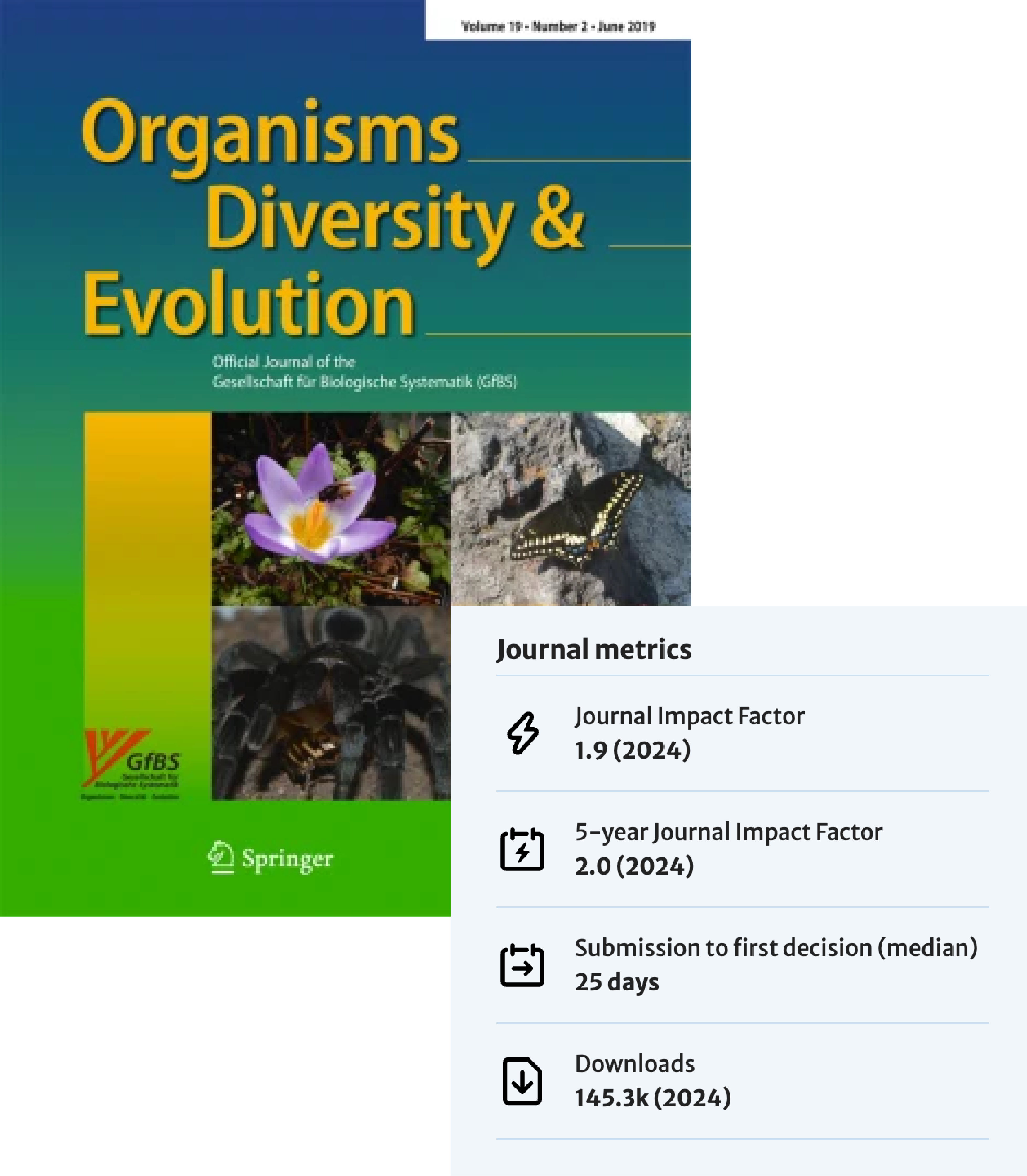
The Proceedings of IPC15 will be published in a special issue of
Organisms Diversity and Evolution !
An Ode to Worms: Proceedings of the 15th International Polychaete Conference (IPC15)
This Special Issue accompanies IPC15 and showcases cutting-edge research on marine annelids across evolution, systematics, phylogenetics, morphology, development, taxonomy, biogeography, and the fossil record—capturing a pivotal moment in annelid research driven by modern genomic approaches.
Submissions open: 01 February 2026
Submission deadline: 31 January 2027
IPC15 Merchandise

Take home a piece of IPC15 — t-shirts, mugs, and more featuring the official conference logo.
Funding Acknowledgment
The 15th International Polychaete Conference (IPC15) is supported by the German Research Foundation (DFG) and the Senckenberg Society for Nature Research through conference funding.

